Starting a D2C brand is exciting.
You finally have a product you believe in, a brand you’ve worked hard on, and a reason to enter the market. The website is live. Social pages are active. The next step feels obvious: start running ads.
Instagram ads, Meta campaigns, influencer tie-ups. Something has to bring orders in. And in the beginning, it usually does. Sales start coming in, dashboards show revenue, and the business feels like it has momentum.
But very quickly, many founders notice something doesn’t feel right.
The brand looks busy. Orders are coming in. But the bank balance doesn’t reflect the effort. Growth starts feeling stressful instead of rewarding.
When growth starts feeling uncomfortable
As ads continue to run, certain patterns begin to show up.
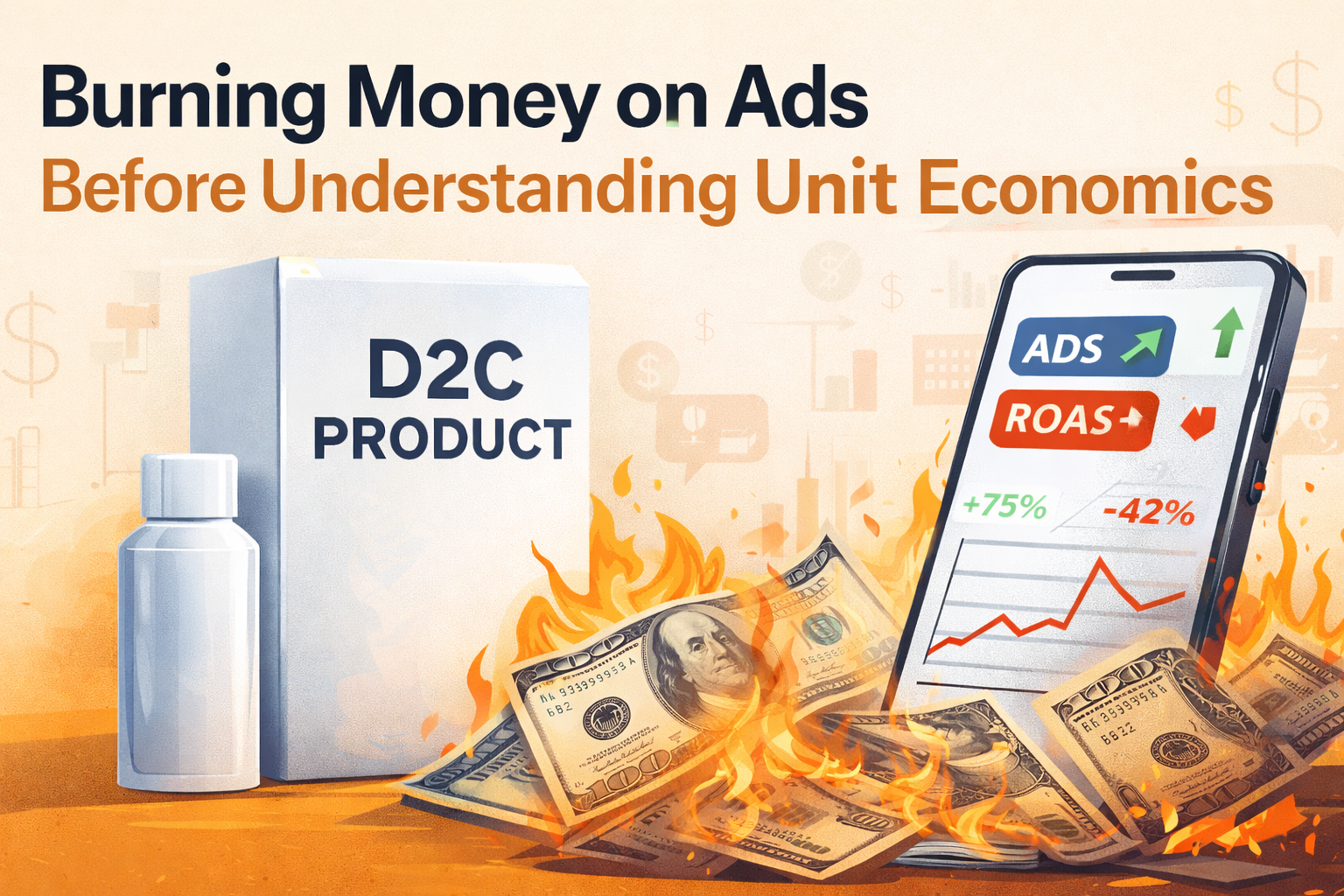
Orders increase, but cash feels tight. Discounts become necessary just to keep volume moving. Ad costs slowly creep up. Returns hurt more than expected.
The business isn’t failing, but it isn’t stable either. Founders start feeling pressure without fully understanding where it’s coming from. This is usually the phase where ads or platforms get blamed, even though the real issue sits deeper.
What unit economics actually means
Unit economics isn’t complicated finance or MBA theory. It’s basic business math.
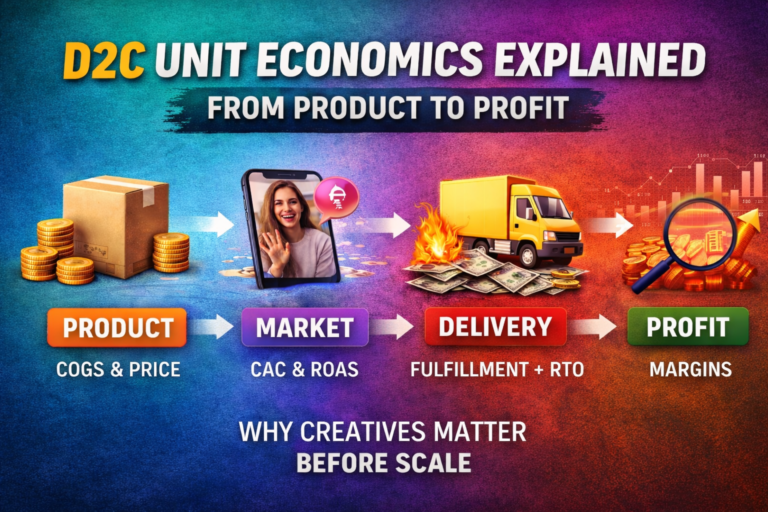
It’s knowing what it costs to make your product, ship it, acquire a customer, and handle returns or operations. What remains after all of this is your real contribution margin, the part that actually keeps your business alive.
Most new D2C brands don’t calculate this clearly before diving into performance marketing. As a result, every sale looks like growth on the surface, but quietly eats into the business underneath.
Ads don’t create margin. They expose it.
Why performance marketing makes the problem worse
When unit economics are weak, ads don’t fix the issue. They amplify it.
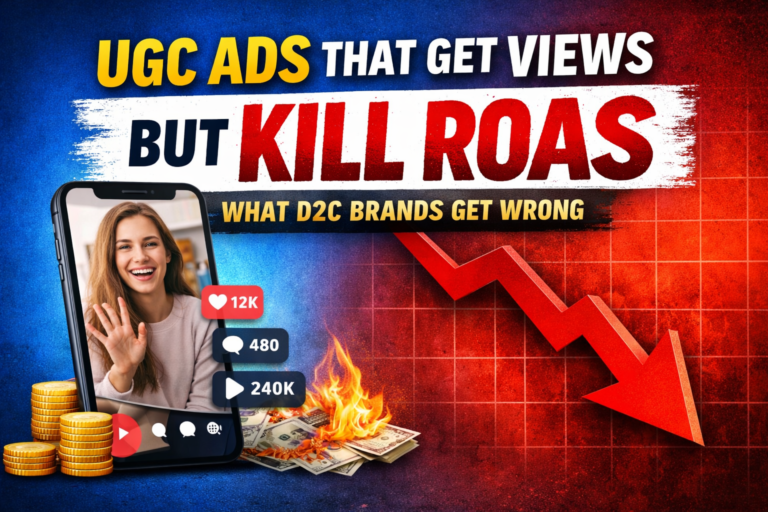
More spend means the same broken math repeated at scale. Revenue grows, but profits disappear. Founders feel like they’re working harder while confidence keeps dropping.
This is why many D2C founders say, “The more we sell, the more stressed we become.” That isn’t a marketing problem. It’s a structural one.
Why ads get blamed, even when they’re not the cause
When losses start piling up, performance marketing becomes the easiest target.
Agencies are questioned. Campaigns are paused. Platforms are blamed for rising costs.
But ads didn’t create the problem. They simply made it visible. If every additional sale hurts cash flow, traffic isn’t the issue. The economics are.
What smart D2C brands do differently
Strong D2C brands approach ads with clarity, not hope.
They know their contribution margin per order, their maximum acceptable customer acquisition cost, and what profitable scale actually looks like. Ads are treated as a tool, not a gamble.
That’s why these brands scale with confidence instead of anxiety.
Where GetADict fits in
GetADict exists between numbers and creatives.
We help brands make sure ads don’t scale losses, messaging aligns with real unit economics, and creative actually converts demand into profitable sales.
We don’t believe in “let’s run ads and see what happens.” We believe in clarity before scale, so performance marketing accelerates growth instead of exposing weaknesses.
A simple reality check for founders
Ask yourself this honestly.
If your best-performing ad scaled two times tomorrow, would profit increase or would stress?
If the answer isn’t clear, ads aren’t your growth engine yet. Clarity is.
Final thought
Performance marketing doesn’t kill new D2C brands. Poor unit economics combined with ads do.
Ads are accelerators. If fundamentals are broken, acceleration hurts.
Fix the math first.
Then fix the ads.
That’s how sustainable D2C brands are built.
That’s how sustainable D2C brands are built.